
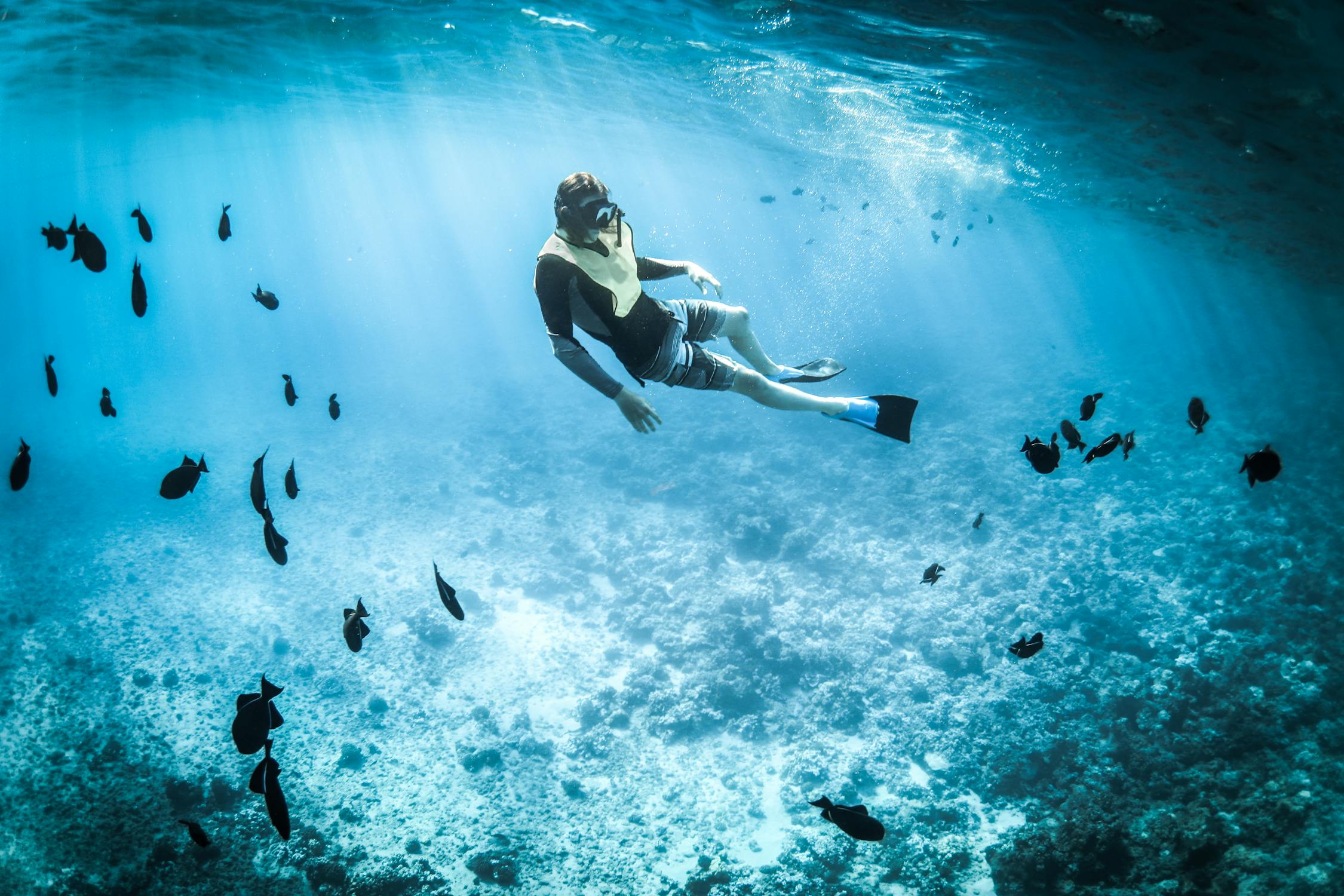
Snuba is a term used to describe a diving technique which uses a combination of scuba diving and snorkeling methods. Like snorkeling, divers will only need to be equipped with fins, a mask, and a breathing device. However, the use of remote tanks, similar to the tanks use in SCUBA (Self Contained Underwater Breathing Apparatus) diving, allows divers to travel to deeper for a longer period of time. For those who are not certified in SCUBA diving, but still want experience underwater adventures, Snuba diving may be a fun way for individuals to get their feet wet with underwater sports.
Tanks
One of the main features of Snuba diving is the location of the air tanks. While engaged in SCUBA diving, divers will carry their tank(s) on their person. The tank s typically strapped into the buoyancy control devices and will dispense air directly into the regulator and into the mouthpiece. In case of Snuba diving, the air tanks remain on the water surface. The tanks are kept on pontoon rafts and a secure line runs from these tanks to the breathing equipment worn by the Snuba diver. The tanks may also be kept on a boat if one is chartered. On a raft, the air tanks can move freely across the surface of water allowing the diver(s) to travel freely throughout the dive site. For added safety, divers are accompanied by a tour guide who will ensure divers are equipped with a sufficient amount of air throughout the dive.
Hoses
A single hose attaches the tank to the diver. Depending on the size of the diving party, there may be a series of hoses connected to the tanks on the pontoon raft. Although divers are accompanied by a certified diver master who will ensure the safety of the group, it is necessary for individual divers to safeguard that their hoses do not become tangled, or disturb the wildlife they are admiring, such as coral reefs.
Maximum Depth
An open water SCUBA certification allows divers to travel to depths of up to 60ft. Snuba divers are only permitted to travel to a maximum of 20ft. This maximum depth will prevent any sickness that may occur from breathing compressed air in deep water. Common SCUBA diving illnesses include decompression sickness (also known as “the bends”) and nitrogen narcosis. Both of these ailments are avoided Snuba diving as divers are not given the opportunity to travel deep enough. While it is not necessary to make safety stops as it is while SCUBA diving, divers with sensitive inner airs should take caution to descend and ascend at a pace that they are comfortable with. This will vary depending on the diver. As the technicalities of this particular sport do not exceed that of SCUBA diving, it is often taught by a certified instructor during a 30 minute session prior to the dive. While individuals must be at least 12-years-of-age to become open water certified for SCUBA diving, the minimum age for Snuba is 8-years-old. This ensures that many families can enjoy the underwater world during trips abroad regardless of their previous experience at depths.

